Friday, 5 October 2018

TIME PIECES: WATCHES AND WRISTWATCHES.

Hi guys, it is always a pleasure to write to you guys all the time. Today i will be writing on wristwatches and why it should be part of your fashion style.

No element of men’s style combines fashion and function quite like the wristwatch. Nor does any other male accessory inspire such devotion and interest. Nevertheless, in recent times there have been those who believed the watch had finally met its demise in the smartphone, and would fade away with other sartorial anachronisms like monocles and sock garters. And yet the popularity of the wristwatch persists. To understand why, we need to understand the history of this timepiece, how its past continues to inform its present, and why a man might consider wearing a watch in the 21st century.

HISTORY OF WRISTWATCHES .

While the wristwatch has become a men’s style staple around the world, up until the late 19th century it was considered a piece of jewelry exclusively for women. Men preferred the pocket watch. This wasn’t some arbitrary fashion decision based on taste or gender; there was actually a practical reason for men’s preference for one over the other.
Before the 20th century, watches were extremely susceptible to the elements. Moisture, cold, heat, and dust could easily bungle the intricate gears and springs within a watch, causing it to lose its accuracy. As men were more likely to face these elements, and held positions in the military, business, and government that made accurate timekeeping more of a paramount concern for them than for women, care had to be taken to protect their timepieces and keep themselves on schedule. Function superseded fashion, so into the pocket men’s watches went, only to be taken out when needed.
As with most things in men’s style, it would take a war for patterns to change and for the watch to leave a man’s pocket and be placed on his wrist.
Pocket watches required a free hand to use — you had to reach into your pocket and hold it while you checked the time. In the tumult of battle, a man needed all the hands he could get. So soldiers began improvising wristwatches by strapping their pocket watches on their arm with leather.

The first instances of the use of these improvised wristwatches are said to have occurred among British soldiers fighting in the Burma and Boer Wars in the late 19th century. Called “wristlets,” these leather straps had a cup to hold their pocket watch. By the 1890s, a few companies started manufacturing leather wristlets for soldiers and even made improvements to them, like adding a compass on the strap for navigation. They were often marketed as “Campaign” or “Service” watches.
Just as GIs returning from WWII continued to wear their government issued tees and khakis as civilians, veterans of the Burma and Boer Wars likely continued using their leather wristlets when they returned home. Male civilians, seeing these rough and tumble war vets sporting what was once considered a lady’s accouterment, began following suit.

Seeing that men — particularly soldiers — were wearing their pocket watches on their wrists, several companies in the late 19th century began creating watches specifically designed for that purpose. Girard-Perregaux was the first company to mass-produce wristwatches specifically for men — particularly for sailors in the German Imperial Navy. The Waterbury Clock Company — now known as Timex — also began selling a men’s wristwatch at around the same time. In 1907, jeweler Louis Cartier designed a wristwatch for his Brazilian aviator friend, Alberto Santos-Dumont, which he called the Santos.
While these manufactures were pioneering a new segment of timepieces, sales weren’t that great. The majority of men still preferred the pocket watch, or the leather pocket watch wristlet.

It would take another war for the watches to find a permanent place on men’s wrists.
World War I ushered in modern, mechanistic warfare, and the wristwatch played a vital role in this process. Before WWI, the coordination and execution of orders relied primarily on visual cues — soldiers would often use semaphore signals to communicate with one another. But because battlefronts were so large during WWI and because soldiers fought in trenches, this visual mode of coordination became increasingly unviable. So clocks began to be used to coordinate attacks: officers would sync watches together at a meeting, return to their respective troops, and initiate the offensive at the agreed upon time.
To do this, many British officers continued to use the improvised wristwatch — their pocket watch tethered to a leather strap. But some began wearing a bona fide wristwatch designed to withstand the rigors of warfare, while maintaining a classy, aristocratic look. Watch companies in England immediately began capitalizing on this new need by making and marketing wristwatches specifically for officers serving in the trenches. They called it, unsurprisingly, the “trench watch.” (The trenches of WWI is also where the “trench coat” was developed.)
The trench watch wasn’t a government-issued piece of equipment (the pocket watch was still the officially sanctioned timepiece), so if an officer wanted one, he was expected to supply his own. Because there wasn’t a single watch company providing watches to the military, this opened up a vibrant and robust market with several competing companies making trench watches for officers. Consequently, you can still find a wide variety of trench watches from this era on eBay and various other auction sites as well as antique stores.
This wartime competition spurred innovation in the men’s wristwatch. Watch hands and numerals donned luminous paint to make time reading easier in darkened conditions (like at night or in the trenches), and unbreakable crystal glass replaced the glass covering the watch’s face. Lugs for attaching the leather strap to the watch started to be built right into the watch, which gave it a more finished look. Porcelain dials to set the time, which were common on pocket watches, were replaced with metal. Finally, the watch casings were made much tighter to keep water and dust out of the watch’s sensitive mechanisms.
Like the veterans of the Burma and Boer wars who returned home to civilian life burnishing their leather wristlets, British vets of WWI came back home wearing their trench watches, thus setting a standard for civilian men to follow. By 1930, more wristwatches than pocket watches were being sold in the U.K.
The adoption of male wristwatches took hold a little more slowly in the U.S., though. Many American doughboys wore the wristwatch while in the trenches, but went back to the pocket watch after returning home because of the wristwatch’s lingering reputation as a “lady’s timepiece.” The only way an American man could get away with wearing a wristwatch as a civilian was if he was taking part in rugged activity that required chronological precision like flying or racing. It wasn’t until the mid-1920s that wristwatch sales among men began to gain ground, and much later than that that they finally overtook pocket watches.
After WWI solidified the masculine bona fides of the wristwatch, manufacturers began creating timepieces to be worn on all sorts of occasions. Yes, there were fancy dress watches, but most wristwatch innovation was driven by specific needs of men serving in the military and taking part in risky and dangerous activities like car racing and aerial barnstorming.

WHY WEAR A WATCH?

Few men these days need to time the start of a battlefield attack, and technology has come a long way since the Battle of the Somme. We’ve now entered an age where a man can check the time by pressing a button on his smartphone, which begs an obvious question: “Are there still any reasons to wear a watch?”
It’s a fair question, and wristwatch sales did in fact start declining in the early 00s, thanks in part to the increased use of smartphones. But after reaching an all-time low in 2009, wristwatch sales have been increasing at a steady clip year in and year out and will likely continue that upward trend.
What’s going on there? Every man has his own reasons for sporting a wristwatch, but here are a few as to why you might consider joining their ranks:

1. Watches Are Convenient…

Phones don’t keep you punctual. Watches do. A wrist watch is the most convenient way to tell the time.
I don’t need a watch because I have a phone, is a common response from a generation who are now questioning the adverse effects of constant cellphone use. Fishing for a cell phone on regular occasions just to check the time looks desperate. A quick glance towards your wrist is a much classier way to keep tabs on time during a date or a meeting. Not to mention how rude it would seem to your companions if you pulled out your phone during a conversation. On other occasions where it’s advisable to leave the phone concealed – like the beach, a funeral, a wedding, a watch is a much more subtle and convenient way to check time.

2. Watches Are Functional…


Any item inspired by the military has a functional use. Wrist watches included.
Wrist watches were first used in the 19th century by the military to synchronize maneuvers during war. Since then, specialized watches have been used in the depths of the ocean by divers and high up in the sky by aviators. One of the big advantages of a watch – especially over a smartphone – is how long it can operate in the field.  Many watches are made to either be self powered through motion or use a small amount of energy from a battery. Think years of maintenance free time telling…..compare that to a smart phone’s 8 hours! A complicated watch is designed with features beyond the basic function of displaying the time and date. Such a functionality is called a complication. Two of the popular complications are the chronograph, which allows the watch to function as a stopwatch and the moonphase complication, which displays the lunar phase.

3. Watches Provide Simplicity…


The best watches don’t use the latest technology. They are powered by ingenious mechanical clockwork technology that predates electricity. So when your cellphone runs out battery – you can trust the technology that keeps running on your wrist. When you wear a watch – it’s less likely you will fall back on your phone as a distraction. Often, checking the phone for time results in a rabbit-trail of activities including checking every messenger app, email and Facebook. When you need to keep track of something as important as time – a unique device to measure and manage it is justified.

4. Watches Signal Style…

The range of acceptable jewelry for a man is limited. Many men are only going to be seen with three main accessories decorating their hands – a nice watch, a stylish pair of cuff links, and a simple wedding band if they’re married. In addition to helping wearers stick to their schedules, wristwatches make it easier for them to display their sense of style. They are a form of self-expression – reflecting hint of danger, adventure and sports depending on the make of the watch. Watches can communicate a lot about the wearer’s personality. For those that prefer a bit of high-status bling on their wrist, a Rolex can be an understated, timeless and incredibly masculine accessory. As the saying goes – boys look at their smartphones  to check time – men look at a watch. Call it what you will, a quality luxury watch is a man’s equivalent to the engagement ring.


5. Watches Embody Craftsmanship…

A wrist watch is more than a time-keeper. It is a symbol of tradition and history encased in a showpiece with extreme craftsmanship. Not many men realize that they are wearing pieces of art on their wrist. Some watch houses have four craftsmen working on one watch for several months – designing complex pieces of technology by hand. It’s detailed art at the higher end of human ingenuity and creativity.
An analog watch has a simple and consistent mechanism. The way of expressing it is where the bulk of the creativity comes in. Watch design is inherently artistic. There is a lot of generic and non-inspiring watch styles out there, but the best stuff is beautiful and how often do you call a tool beautiful? Art on a watch can come in multiple forms. The dial can literally be a painting, or the design of the instrument itself is pure art. For many people – the movement arouses as much fascination as the dial and case.

6. Watches Make Great Heirlooms…

Not only is a timepiece the quintessential gift – it is the quintessential heirloom. No matter what your philosophy is on the end of life, we can all agree that people can live on through the memories of those that knew them. Owning timepieces from a different era is a remembrance of people who lived before you. Having their watches makes you think of them, in a real way. They wore these same watches which show signs of use, care and and love. A watch collection is also a legacy. It doesn’t necessarily have to be worth a mini treasure – but leaving your watch(es) to someone you care about is in essence passing on values that were important to you, to someone else.

7. Watches Help You Create A Relationship With Time…

Since the days of the sundial (and probably before) – men have been obsessed with devices that measure time. A reminder that our time is limited. Wearing a watch has a positive effect on my attitude towards time. I am more attentive to how I spend my 24 hours. Beyond the technical and mechanical intricacies of a watch – men  are fascinated by these devices that claim to mark and control time. There is a passionate community of watch lovers who dive into the details of watch-making and collecting.
The only other obsession matched with the passion for this inanimate object is the passion men share for cars. A watch collection is far easier to maintain and less expensive as a hobby. Everyone can rock a watch. Wearing a watch is a great way to add interest to an outfit, especially if you’re a guy. Find a wrist watch that really stands out from the rest.
It could be the beginning of a long friendship.

Monday, 24 September 2018

MENS CLOTHING COMBO

Hello everyone, it's been a while since i dropped something useful here, the busy nature of the world has taken a lot out of my time. Good to be back tho.
In this article, i will try and discuss some dos and don’ts for mens cloth combinations. Nothing too serious and very basic stuffs that we can always remember and apply daily. There are certain “rules” that aren’t so strict when it comes to mens fashion clothing combinations. Sometimes, you can bend them  in a way that works better. But that takes research and lots of practice (don’t expect to get it right the first time tho...lol).
So in the meantime, here are some easy rules to follow…

RULE #1: GO FOR COMPLEMENTARY OVER MATCHING...
The first rule in matching is you don’t have to match things exactly! Specifically for your trousers and the multiple layers on top.
The ranking goes as follows:
Complementary > Matching > Bad match > Putting no thought
The reason we have complementary ahead of matching is between both techniques – the first one lets the clothes “build each other up” to create a higher-level look. So if you’re going the “complementary” route – pay attention to the color wheel. The trick is to ensure the main colors of your wardrobe are as far apart on the color wheel as possible.
But that doesn’t mean you ought to avoid “matching” altogether. It’s actually safer than “complementary” (as there are cases when people get distracted by a combination of 2+ strong colors you’re wearing). When you’re worried about crossing the line and showing a stark contrast, the fallback is to match your items based on a single color (like an oxblood belt with oxblood shoes).
In the end, matching = a pretty decent appearance. But it’s not likely going to amaze everybody around you the way a successful “complementary” outfit could. A “bad match” might occur if the colors are closer to each other on the color wheel, or if there’s more than one bright color used. But it still beats making random choices and putting no thought! The effort still counts for something.


RULE #2: LEATHERS SHOULD MATCH…
Simply put, leather is AWESOME. History shows how it represents wealth and status. So take advantage of that and let your leather pieces stand out as a group – with the same color.
But this rule isn’t strict. Two things you should focus on matching are (1) your shoes and (2) your belt. Then follow-up by means of the color of your (3) watch strap and (4) leather bag – but only if it’s convenient. Don’t spend money just for that purpose.
And it’s important to remember in this case – the more different the colors of your leathers are, the worse of a match you’ll end up with. So pairing sleek black boots with a light brown belt is out of the question (unless you cover up the belt). Chocolate brown boots are a better alternative here.
Your black leather footwear can go with a belt that’s any shade of gray (since gray is a non-color). But if your want each leather piece to stand out equally – I suggest finding ONE particular color you like and stick to it.
That’s probably what you’ll need to do if your belt options are limited. Most of us have about 2-3 individual belts at home. Buying more could feel like a waste…


RULE #3: METALS SHOULD MATCH…
It’s the same deal. You want your watch, belt buckle and other pieces of metal to match if possible.
Think about the item you like wearing most. If it’s a certain watch – take note of the color and consider getting a matching belt buckle. Silver goes with silver, while gold goes with gold (or even brass if there’s no obvious difference). But this is a mere GUIDE. There are exceptions.  Maybe your wedding ring is gold but you look good with silver metals. Or maybe you have a silver watch that’s been passed on by your father. So don’t even think about replacing items with sentimental value! Because contrasting metals are really minor problems.


RULE #4: WEAR ITEMS WITH THE SAME LEVEL OF FORMALITY…
Would you pair up a black tie suit jacket with basketball shorts? You get the idea.
All clothing items fall somewhere along the formality scale. And since your outfit is primarily based on its “weakest link” – don’t match your most formal stuff with your least. It will only spoil how good you look as a whole.
A formal-casual combo is like oil and water. The two elements don’t mix. You’ll only end up raising a question mark in people’s heads. They’ll wonder if you had trouble finding something to wear, got dressed in a hurry, or were simply trying out a new (but strange) style. However – it does get tricky regarding some types of leather shoes. A given pair may appear more casual than formal (especially if it has more broguing or details). You might be able to wear it with jeans but not with a business attire. So those things will require some trial and error.
And in general:
  • Darker colors = higher level of formality (especially for suit jackets and shoes)
  • Lighter colors = lower level of formality; best for casual events or summer wear

RULE #5: LEARN FROM FAMOUS PEOPLE…
You might be processing all this information and thinking “A doesn’t go with B but goes with C…” quite a lot. Juggling all these yes’s and no’s.
But the art of matching is much easier when you have a ROLE MODEL. Someone who’s always seen in public with a killer ensemble. It could be Idris Elba or Ryan Gosling on the red carpet, Bruno Mars when he performs on live television, or Roger Federer when he appears on watch ads. Those are the masters you want to learn from. They present what works every time (or at least their stylists never fail to make the right calls, but that’s beside the point). Take inspiration from them – but don’t copy every little detail. Your individuality still needs to pop out.


It helps if you know how to incorporate texture and pattern in mens wear. So take the time to read up. And here’s something you may not know: You can actually get away with 4+ unique patterns at once! It’s a cool clothing combination worth trying. Just make sure the colors are muted, and no two patterns are of the same size or form.  That’s one of many things you’ll figure out by experimenting. By trying this and that. It’s part of being a good matcher – and developing your own personal style.
So don’t be afraid to experiment now and then (even if it means breaking some of the rules above). But do have some trusted friends to preview your new outfit and say whether or not it looks fine.

Wednesday, 22 February 2017

SHOES AND MEN.

Selecting a pair of shoes is a personal, if not intimate experience. We wear our favorite shoes hundreds of times before throwing them out or restoring them. And, if our shoes look good and feel good on our feet, then somehow we feel better than if our shoes are in bad shape.
This very human relationship with shoes is a strange phenomenon that is subject to a lot of contemplation by neophytes and experts alike. Even sociologists have tried to understand why shoes hold such a strong intrigue for so many people.
Some men have an extreme devotion to understanding even the slightest nuance about the quality and appearance of bespoke versus high-end handmade or bench-made ready-to-wear shoes. But other men really don’t know what to look for when buying a pair of shoes, other than trusting their intuition about how the shoes look on their feet, and deciding whether the pair is affordable, or not.

Here is a list of 4 things to look out for in a shoe as a man....

1.IS THE QUALITY OF THE LEATHER ACCEPTABLE?

 This is a particularly difficult subject to address, and only with experience can one discern excellent leather quality from good leather quality.
Since everyone has to start somewhere in order to master a subject, we will try a first-attempt to tackle the topic of leather quality in shoes.
Put plainly, big companies (e.g., John Lobb of the Hermès Group) have the most money to purchase the highest quality of leather. It is that simple. A handful of companies are thus able to buy large quantities of choice leather in bulk, to the extent that an industry-wide shortage of such leather can result.
This can cause a problem for many talented shoemakers who want to practice their trade and build their businesses. Not being able to access “better leather”, puts a number of gifted shoemakers in a position of searching for clever ways to provide well made shoes with great raw materials.
 While a consumer cannot determine a specific leather quality simply by looking at a shoe, there are some visual cues that can help guide a buying decision.

A. Practice tuning your eye to what quality leather looks like, and what it does not look like by reviewing a leather grading system.

B. Understand that leather is taken from different parts of the hide and some parts of the hide render a nicer appearance than other parts of the hide.

C.  Notice the thickness of the leather. Thicker leathers may hold their form better, but are at times dense and less flexible.

D.  Pay attention to the color consistency of a new shoe as a cue to leather quality. If a shoe has a patina, analyzing color variations is useless.

E. Does the outer part of the shoe appear to have a surface chemical treatment, indicated by stiffness or an unnatural sheen? Look for shoes that do not have a surface treatment to hide flaws.

F.  Remember that whole-cut shoes are beautiful but are the most difficult to make. Whole-cut shoes have a full unbroken canvass that reveals each wrinkle and crease occurring on the shoe, while conversely, toe-caps / brogues show fewer wrinkles, since smaller pieces of leather comprise the total shoe, which leaves less surface area to be stressed and challenged.


2.  IS THE SHOE ADEQUATELY COMFORTABLE?


New shoes can feel tight and rub at the toes and the back of the heels, causing blisters and pain…until at last, the feet and the shoes find a place of conformity and comfort. Many quality shoes, custom and ready-to-wear alike, require a notoriously painful “break-in” period.
At times, custom shoes can be paradoxically difficult to break in, if the leather is especially thick or if shoes are made from strong hide cuts that are initially resistant to relaxing. Custom shoes also hug the feet closely for a more defined aesthetic look, which most of the time leaves practically no extra pockets-of-space for the feet.
This phenomenon of an expected break-in time may not be true for bespoke shoes crafted by Master boot makers specializing in orthopedics, such as Anthony Delos at Berluti or Dimitri Gomez.
Ready-to-wear shoes have been known to take less time to break in, since weaker leather may be used and because the shoes are generally roomier in order to deliver a more universal sizing scale for each specific shoe size.
Thus, while custom shoes are much more rewarding in the long run, ready-to-wear shoes have their advantages when time, money, and more immediate comfort is important. Yet, according to Paolo Scafora of the Neapolitan eponymous brand, most quality shoes require at least 24 full hours of wear before full comfort is experienced.


How to Evaluate Comfort in a Shoe?
A. Make sure you bring the correct pair of socks to wear with the shoes you try on, so you can correctly evaluate the fit. After you try on the shoes, don’t take them off for another 10 – 15 minutes in order to identify potential pressure points. As many of us have learned the hard way, rushing into a buying decision without evaluating comfort is a mistake.
B. During the try-on, note where the pressure points are on the shoe and decide if the pain threshold is reasonable enough for a decent break-in time of around 20 wears or less. As you gain more experience in buying shoes, you will become more intuitive in knowing which shoes will break-in within a reasonable time, and which will not. Hopefully, if you are sized correctly, you will be lucky enough to have few, if any problems.


3. DOES THE SHOE HAVE AN OUTSTANDING APPEARANCE/DESIGN?


The entire shoe “last” (overall mold/shape of the shoe) is easier to analyze when you look at specific parts of the shoe.Noticing the toe shape, lace or buckle closure, and the waist of the shoe is a great way to analyze which designs you prefer:

A. The toe shape is a defining factor that differentiates one shoe from the other. Do you prefer the elegant country-side look of a rounded toe on a Weston, or the sophisticated eagle-claw toe of a Corthay shoe?
Before getting into the subject of toe-shape, we would like to plead with all men to avoid shoes with toes that point skyward. Nothing says “cheap” louder than this look.That point aside, if you recognize a few toe styles that you like, then selecting a pair of shoes becomes easier.

 B. Lace/Buckle Closure – Bespoke shoes typically have a complete lace closure, with no gaps in the leather sections where the laces meet–thus, almost fully hiding the tongue of the shoe.

 C. The Waist – One of the most fascinating areas to examine on a pair of shoes is the shoe waist. Most shoe aficionados are sure to be knowledgeable about this finer point of shoe design.
The beveled waist is something that RTW(Ready To Wear) manufacturers have only recently been able to do well, since the machine created to create a defined waist is a recent invention. Even without the bevel, RTW companies are focusing more and more on cutting the waist further inward, and closer to the leather.
Generally speaking, the deeper the waist cut, the more sophisticated the shoe—although some men prefer the look and feel of the straighter waist cut.


4. IS THE SHOE WELL-CRAFTED?

 A. Note how the sole is attached to the upper part of the shoe.

B. Is the shoe constructed with adequate arch support for your foot? Feel inside the shoe and assess whether there is enough arch support for your foot. A quick subjective review is well worth the few seconds it takes to evaluate whether there is enough arch support in the shoe, or not.

C. Are there any faults to the shoe like mis-sewn areas that create creases or bumps that may aggravate the foot? Run your fingers inside the shoe and check for any obvious faults.

D. Are there any apparent visual flaws to the shoe? Look for scratches, dents and bumps that should not be present.

One article can never do the subject of men’s shoes the justice it deserves, but hopefully this information is a good start for newcomers who want to have a better idea of what they are buying before making a financial commitment.
We welcome any other tips from well-versed readers that may help those who are just learning about men’s shoe design and quality.


Saturday, 23 July 2016

T.I Nathan 2016 Resort Collection

Hello lovelies,

My brother asked me some days ago, "Who is this T.I Nathan with pictures all over Twitter?" 

Temitayo Nathan Ilesanmi is the Designer behind the Nigerian label T.I Nathan and his 2016 Resort Collection, Lacey, is what got him trending on social media. 

This collection for him and her can take you from day to night and from casual to formal. 

Do you love lace? Do you love couples fashion match up? Then this is the collection for you.


Photocredits 
Creative Direction - Temitayo Nathan @temitayonathan
Makeup - Leylarh Cadne @leylarhcadne
Photography - Jerrie Rotimi @jerrierotimi
Stylist - Mag Payne @magpayne1
Muses - Laila Rahman @ellecadne & Seun Logan @seunlogan


Are you on bbm? Follow my BBM CHANNEL C0021BC4D 


Friday, 8 July 2016

July 2016 Fashion Illustration

Hello lovelies,

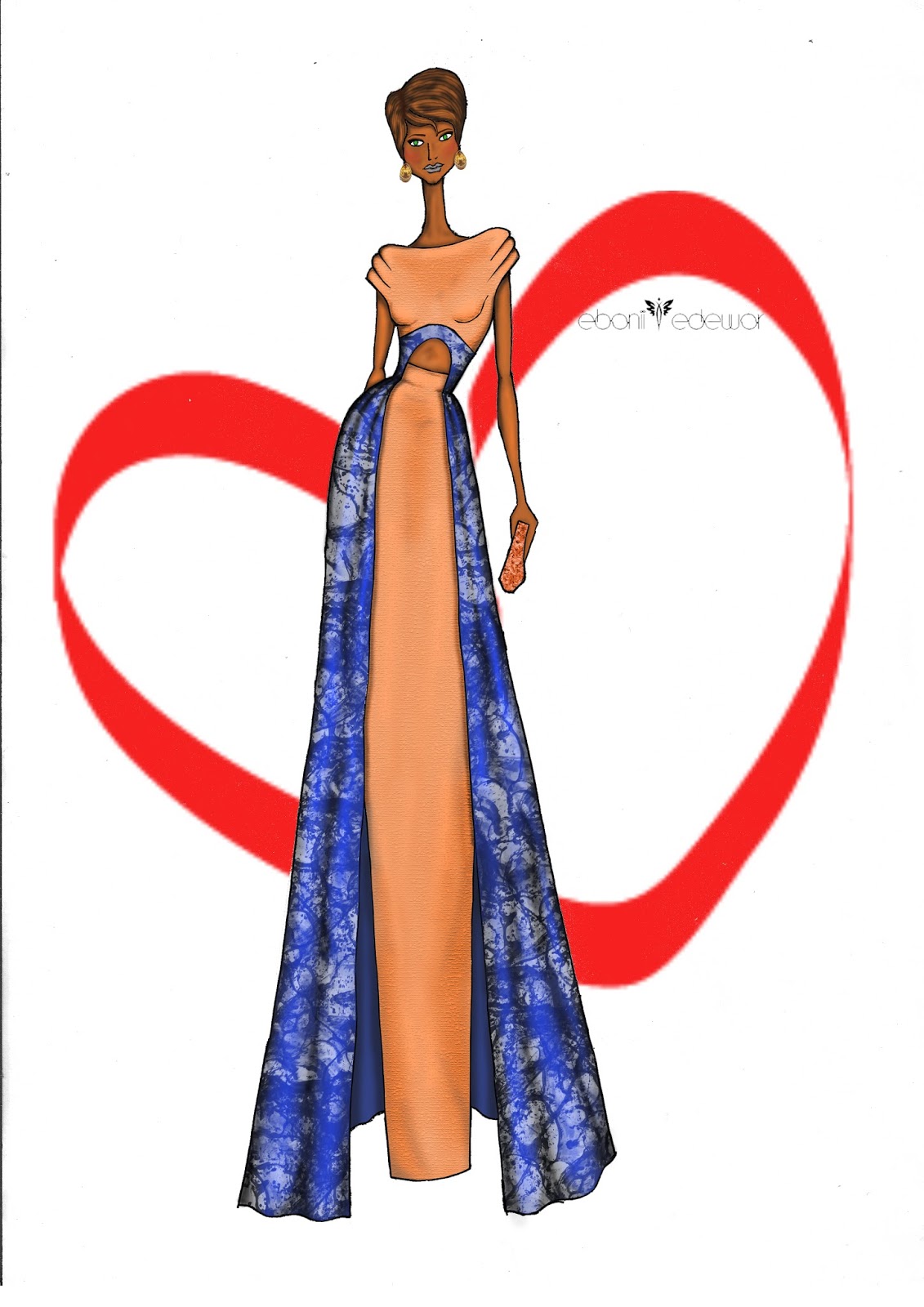
Its July and I've got something a little different. Didn't think I'll be able to get an illustration ready this month and considered a throwback illustration but was finally able to make out to make out time for this cute number. 

About this illustration . . .   I planned to illustrate and old sketch but ended up tweaking it and it ended up being something different. I designed the blue print with the aide of the Photoshop brush tool. And something I really love about this illustration is how the shades and highlights came out on the blue print. When I was done, I almost didn't want to part with it, but, here it is. A friend named her 'Halle' after the actress, Halle Berry so say hello to Halle, my July girl. From Halle and I, have a July as great as you.


Which Nigerian or foreign celebrity do you think can rock this look?  


Are you on bbm? Join my BBM CHANNEL - C0021BC4D


Sunday, 12 June 2016

OnStyle: Power Monday

Hello lovelies,

Don't let the thought of Monday weigh you down. Be happily OnStyle with this menswear fashion idea and stay on top of the Monday madness. If the pressure gets to you, remember to breathe and smile because you've got swag and intellect and no one can take that from you.

Monday is just a day in the week. This is just a phase in your life. Style is eternal. Keep believing in your dreams.


Sunday, 5 June 2016

OnStyle: Style Attack

Hello lovelies,

I've been a bit swamped with other things but I didn't forget about your style needs. Say hello to the first 'style attack'; a compilation of styles for your viewing pleasure, to help organise your wardrobe and keep you preoccupied if you're feeling a little bored.

@ikeoluwapo

@fredafrancis

@bolinto

@k8henshaw

@aycomedian

@ozzyagu


@vonneofficial

@clan_diaries

@roselynn

@iamseyishay

@tokemakinwa

@stylepantry